
Rent or Buy a Flat on Sarjapur Road – Which Is Better in 2026?
Sarjapur Road has become one of Bengaluru’s most popular residential corridors, attracting IT professionals, families and investors looking for a well-connected location with access to major employment hubs. With residential communities, schools, healthcare facilities, retail destinations and improving infrastructure developing across the area, many people considering a move to
East Bengaluru face an important question: should you rent or buy a flat on Sarjapur Road?
There is no single answer that works for everyone. The right decision depends on your finances, how long you plan to stay in the area, your career plans and what you expect from your home in the long term.
Let’s look at the key factors that can help you make a more informed decision in 2026.
Why Homebuyers Are Looking for Flats in Sarjapur Road
Sarjapur Road’s appeal comes largely from its strategic location. The corridor provides access towards Whitefield, the Outer Ring Road, Electronic City and several major technology and business hubs.
This connectivity has supported strong residential demand, while the surrounding neighbourhood has developed a growing ecosystem of schools, hospitals, shopping and lifestyle destinations.
The area is also evolving from a predominantly commute-focused location into a broader residential destination. Newer developments are increasingly focused on gated communities, larger homes, landscaped spaces and integrated lifestyle amenities.
For someone deciding whether to rent or buy a flat on Sarjapur Road, these long-term location fundamentals are worth considering.
Renting a Flat on Sarjapur Road: When Does It Make Sense?
Renting generally offers greater flexibility.
If you are new to Bengaluru, uncertain about your long-term work location or expect to relocate within a few years, renting can help you avoid committing a large amount of capital to a property.
The initial financial requirement is also usually lower. Instead of paying a substantial down payment, buyers typically need to manage a security deposit, moving expenses and monthly rent.
Renting can therefore be a practical option for:
- Professionals who may relocate for work
- People new to Sarjapur Road
- Buyers who are still building their savings
- Individuals who want to test the neighbourhood before purchasing
- People who prefer keeping their capital available for other investments
However, rent is an ongoing expense. Rental agreements may also include periodic increases, meaning your housing cost can rise over time.
Buying a Flat on Sarjapur Road: When Is It Better?
Buying can make more sense when you see yourself living in the area for several years.
A home purchase requires a larger initial commitment, including the down payment, registration-related expenses, loan costs, interiors and other associated expenses. Monthly EMIs can also be higher than the rent for a comparable property.
But homeownership provides something renting does not: ownership of an asset.
With every EMI, a portion of the payment contributes towards the principal amount of the loan. Over a longer period, this can help build equity in the property.
Buying may therefore suit you if:
- You plan to stay in Bengaluru for the long term
- Your income is stable
- You have sufficient savings for the down payment
- You can comfortably manage the EMI
- You have an emergency fund after making the purchase
- You want greater control over your home
- You are looking at the property as a long-term asset
The key is not simply whether you can obtain a home loan, but whether the overall purchase comfortably fits your financial plan.
Rent vs Buy: Look Beyond the Monthly Cost
One of the most common mistakes is comparing only monthly rent with monthly EMI.
For a purchase, you should consider the complete cost of ownership. This can include the down payment, stamp duty and registration, loan interest, maintenance charges, property taxes, interiors and other expenses.
Renting also has costs beyond monthly rent, including security deposits, maintenance where applicable, moving expenses and future rent increases.
A simple comparison should therefore look at your total five-to-ten-year financial position, rather than just asking whether rent is cheaper than EMI.
The longer you plan to stay, the more important this comparison becomes.
How Long Should You Stay Before Buying?
Your expected duration of stay is one of the most useful factors when deciding whether to rent or buy.
If you expect to stay for only one or two years, renting may provide greater flexibility and avoid the transaction costs associated with purchasing and eventually selling a home.
If you expect to remain in Sarjapur Road for many years, buying can become more attractive because you are spreading the initial purchase costs over a longer period while building ownership in the property.
There is no universal break-even period because property prices, rent, interest rates, maintenance costs and investment returns vary. Instead of following a fixed rule, calculate both scenarios based on your own finances.
Think About the Lifestyle, Not Just the Investment
A home is not only a financial asset.
If you are buying for your family, consider what the community offers in addition to the apartment itself.
Do you have access to green spaces? Are there children’s play areas? Are sports and fitness facilities available? How close are schools and hospitals? Is the community designed for everyday family life?
These factors can be especially important when comparing newer residential developments on Sarjapur Road.
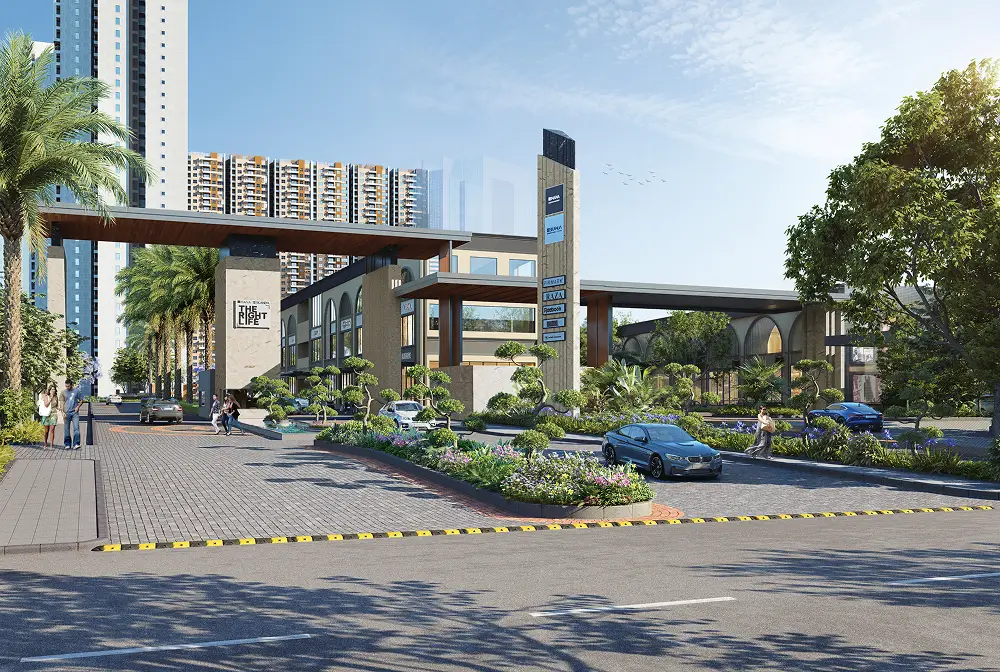
The Right Life, for example, is planned as a 100+ acre integrated township on Whitefield-Sarjapur Road, with 84% open area and a combination of homes, landscaped spaces, sports, wellness, retail and social areas.
For families considering a long-term purchase, this kind of larger community environment can be an important consideration beyond the apartment’s price.
What About Property Appreciation?
Property appreciation is often one of the reasons people choose to buy rather than rent.
Sarjapur Road has benefited from its proximity to major employment corridors and continued residential and infrastructure development. However, buyers should avoid assuming that every property will appreciate at the same rate.
The exact micro-location, developer, construction quality, accessibility, amenities and future infrastructure can all influence a property’s long-term value.
Even within Whitefield-Sarjapur Road, conditions can vary considerably between different locations.
Therefore, buying should ideally be based on the property’s suitability for your lifestyle first, with potential appreciation treated as one part of the overall decision.
Don’t Forget the Location Within Sarjapur Road
Sarjapur Road is a large and rapidly developing corridor, so the exact location of a property matters.
Before purchasing, check your daily commute during peak hours rather than relying solely on map distances. Also consider nearby schools, hospitals, supermarkets, public transport and access to major roads.
For families, the surrounding environment can be just as important as the apartment itself.
The Right Life is positioned on the Whitefield–Sarjapur Road corridor and is designed as an integrated township rather than simply a collection of residential towers. Its approach combines residential spaces with nature, recreation, sports and social infrastructure.
So, Should You Rent or Buy a Flat on Sarjapur Road?
For someone who values flexibility and expects to move within a few years, renting can be the more practical choice.
For someone with stable finances who expects to remain in Bengaluru for the long term, buying can offer greater stability and the opportunity to build property ownership over time.
The best answer depends on your personal circumstances.
Instead of asking only, “Is rent cheaper than EMI?”, consider a bigger question: “Which option makes more sense for my finances, lifestyle and plans for the next five to ten years?”
For families who are confident about staying in Bengaluru, exploring well-planned residential communities on Sarjapur Road can be a worthwhile next step. And for those who are still uncertain, renting first can provide valuable experience of the neighbourhood before making a long-term commitment.
Final Thoughts
The decision to rent or buy a flat on Sarjapur Road in 2026 ultimately comes down to three things: your financial readiness, your expected duration of stay and the kind of lifestyle you want.
Renting offers flexibility and lower initial commitment, while buying provides stability and the opportunity to build home equity over time.
Whichever option you choose, take the time to compare the complete financial picture and evaluate the location carefully. A home should not only fit your budget today but also support the way you want to live in the years ahead.